Medora, North Dakota: How a Tiny Cow Town Became North Dakota's Top Tourist Destination
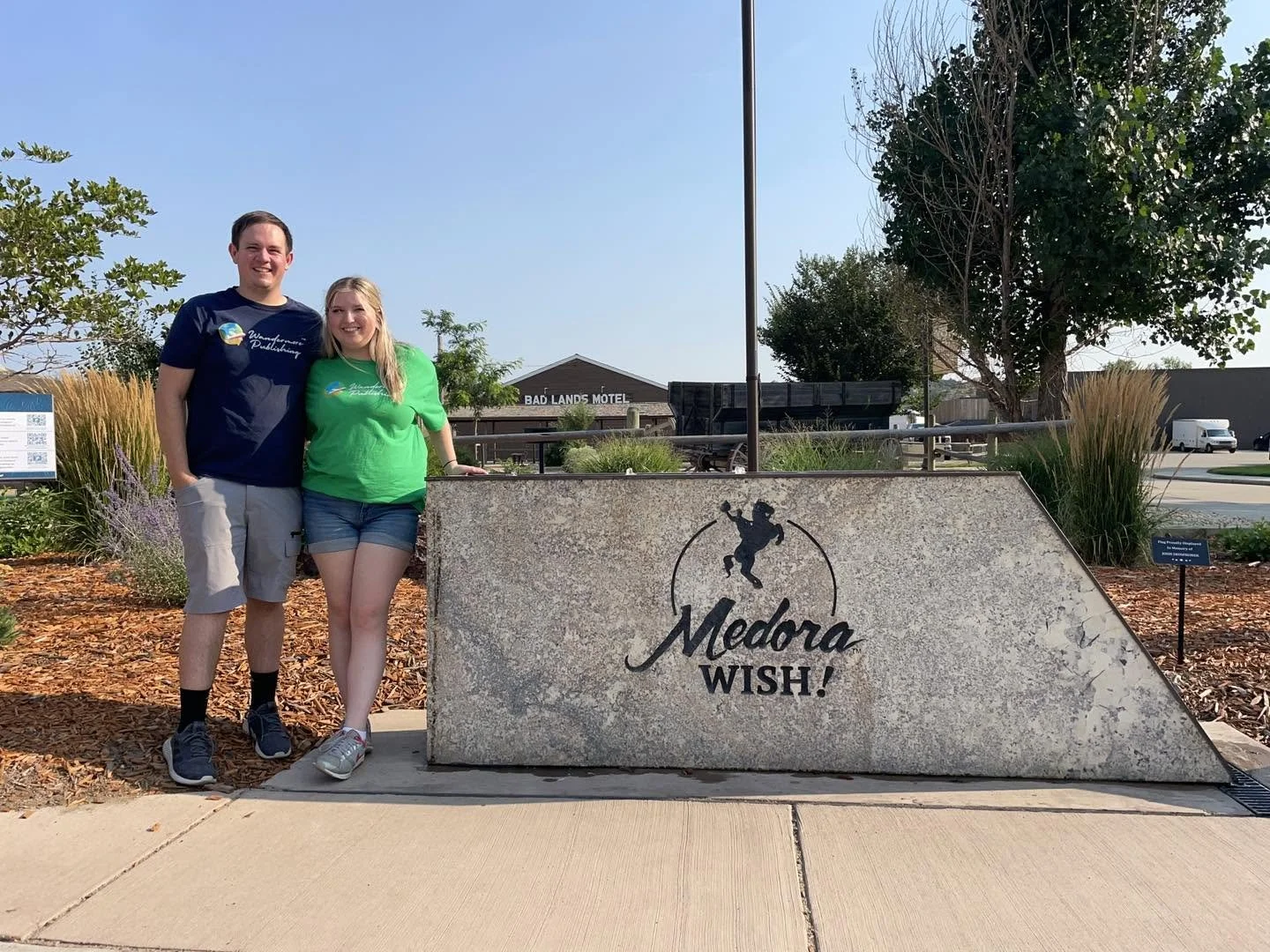
Medora! Home to just over 100 residents, this tiny town welcomes hundreds of thousands of visitors each year as the gateway to Theodore Roosevelt National Park and the North Dakota Badlands.

A group of horseback riders passes above Medora's famous hillside sign, a fitting scene for a community that proudly embraces its western heritage.
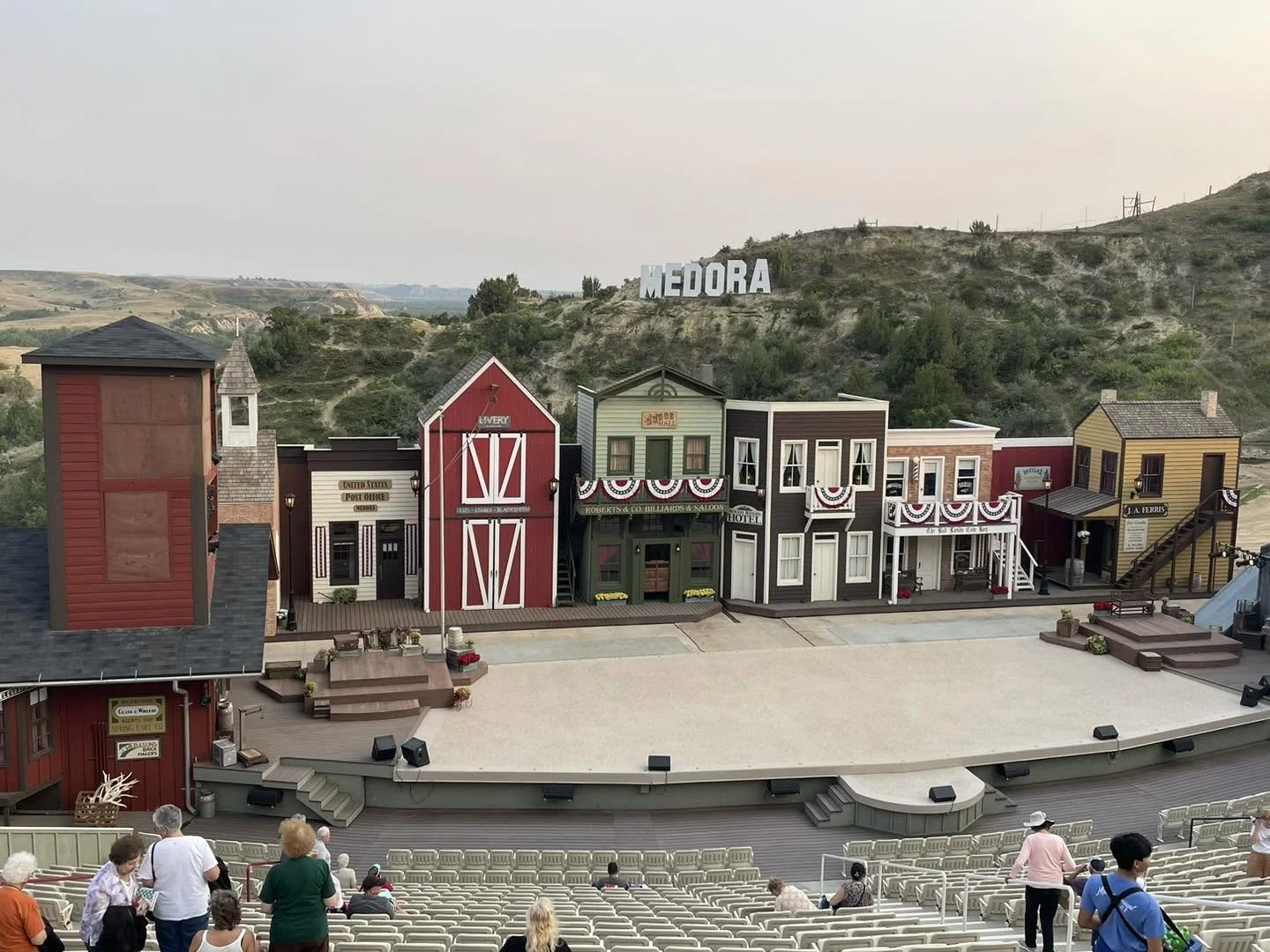
Set against the backdrop of the Badlands, the Burning Hills Amphitheatre provides one of the most unique outdoor performance venues anywhere in the United States.

One of Medora's most famous traditions, the Pitchfork Steak Fondue features tender steaks cooked on pitchforks over an open flame while overlooking the Badlands. A must-add to your Medora Musical ticket!
Population: 121
County: Billings County (County Seat)
Few communities embody the spirit of North Dakota quite like Medora. In fact, at this point, Eliese and I would argue that Medora is synonymous with North Dakota tourism when you're talking to somebody who lives outside of the state! Home to just over 100 residents, this small western town welcomes hundreds of thousands of visitors each year thanks to its fascinating history, western heritage, and its doorstep location to Theodore Roosevelt National Park.
Today, Medora proudly markets itself as "North Dakota's #1 Destination," a title well deserved by an incredible community that transformed itself from a struggling frontier settlement into one of the Midwest's premier tourism destinations.
Founded by a French Nobleman
Medora's story began in 1883 along the Northern Pacific Railway when French aristocrat Marquis de Mores established a meatpacking plant near the Little Missouri River. His ambitious goal was to ship fresh meat to Chicago using refrigerated railroad cars, a relatively new technology at the time. De Mores named the community after his wife, Medora von Hoffman, creating a town that would forever bear her name.
The area already had a small military presence. In 1879, a cantonment known as Little Missouri was established nearby to protect Northern Pacific Railroad workers as they pushed westward across the Dakota Territory. Shortly after founding the town, De Mores built the Château de Mores, a large hunting lodge and summer residence overlooking the surrounding Badlands. The family occupied the home seasonally before returning to France during North Dakota's harsh winters.
Theodore Roosevelt's Life-Changing Experience
One of Medora's most famous visitors arrived later that same year. In September 1883, a young Theodore Roosevelt traveled west to hunt buffalo in the Dakota Badlands. On September 17, Roosevelt recorded his first buffalo kill with the assistance of local rancher Joseph Ferris.
It'd be an understatement to say that the experience changed his life! In fact, it changed its entire trajectory. Roosevelt quickly became fascinated by ranching and invested in the Maltese Cross Ranch near Chimney Butte. Over the next six years, he spent extended periods in the region, learning the realities of frontier life and developing the conservation ethic that would later define his presidency. Roosevelt reportedly stayed at the Château de Mores on several occasions and frequently credited his time in North Dakota for shaping his character. Years later, while speaking in Fargo, Roosevelt famously remarked that had it not been for his experiences ranching in North Dakota, he likely never would have become President of the United States.
While he may not have been born a North Dakotan, he certainly embodied the North Dakotan spirit we see throughout the Peace Garden State today!
A Town on the Brink of Disappearing
Despite its promising start, Medora soon faced difficult times. The Marquis de Mores' meatpacking venture collapsed by 1886, while Roosevelt's cattle investments suffered significant losses during the brutal winter of 1886–87. With its primary industries failing, Medora appeared destined to become another forgotten western ghost town. For decades, the community survived largely because of its location amid the spectacular North Dakota Badlands. Growth remained slow, and Medora was not officially incorporated until the 1950s.
Harold Schafer's Vision Saves Medora
Medora's modern revival can largely be credited to one man: Harold Schafer. After finding tremendous success with the Gold Seal Company, Schafer began purchasing and restoring historic properties throughout Medora. His investments included renovations to the Rough Riders Hotel, the Ferris Store, and numerous other buildings throughout town.
Schafer believed Medora had the potential to become North Dakota's premier tourism destination.
To help realize that vision, the Theodore Roosevelt Medora Foundation was established to preserve the community's history while expanding visitor opportunities. Millions of dollars were invested in restoring historic landmarks and developing attractions that continue to draw travelers from around the world.
The Medora Musical
Among Schafer's most influential investments was the town's amphitheater. Following a major renovation, the venue hosted the first performance of the Medora Musical in the summer of 1965. The outdoor production celebrates the area's western heritage, Theodore Roosevelt's legacy, and the colorful history of the Badlands. It caters heavily to kids, but it's a cute performance that can be enjoyed by history enthusiasts, art lovers, and those who genuinely love a good performance.
Today, the Medora Musical remains one of North Dakota's most beloved attractions, drawing tens of thousands of attendees each year to the stunning Burning Hills Amphitheater. The show, combined with attractions like the famous Pitchfork Steak Fondue, has become a rite of passage for many visitors to western North Dakota. We got no less than eight-bajillion recommendations to add it to our experience, and it didn't disappoint! The steak is amongst the most tender you'll have anywhere (and it's unlimited, if you purchase that pass). It's accompanied by all the fixins' like baked beans, garlic bread, fruit, baked potatoes, broccoli and cauliflower, brownies, donuts, and lemonade. Show up on an empty stomach to really fill up and get your money's worth...that's what we did!
Things to Do in Medora
Despite its tiny population, Medora offers an impressive collection of attractions and experiences. You could spend days here and never do it all:
Popular sites include:
Château de Mores State Historic Site
The Maltese Cross Cabin
The North Dakota Cowboy Hall of Fame
The Harold Schafer Heritage Center
The Billings County Museum
The Rough Riders Hotel
Pitchfork Steak Fondue
The Maah Daah Hey Trail
The Billings County Courthouse
The Maah Daah Hey Trail is particularly notable, stretching more than 140 miles through the Badlands and serving as one of the nation's premier destinations for mountain biking, hiking, and horseback riding.
Theodore Roosevelt National Park
The primary draw for most visitors, however, is the South Unit of Theodore Roosevelt National Park, located directly adjacent to town.
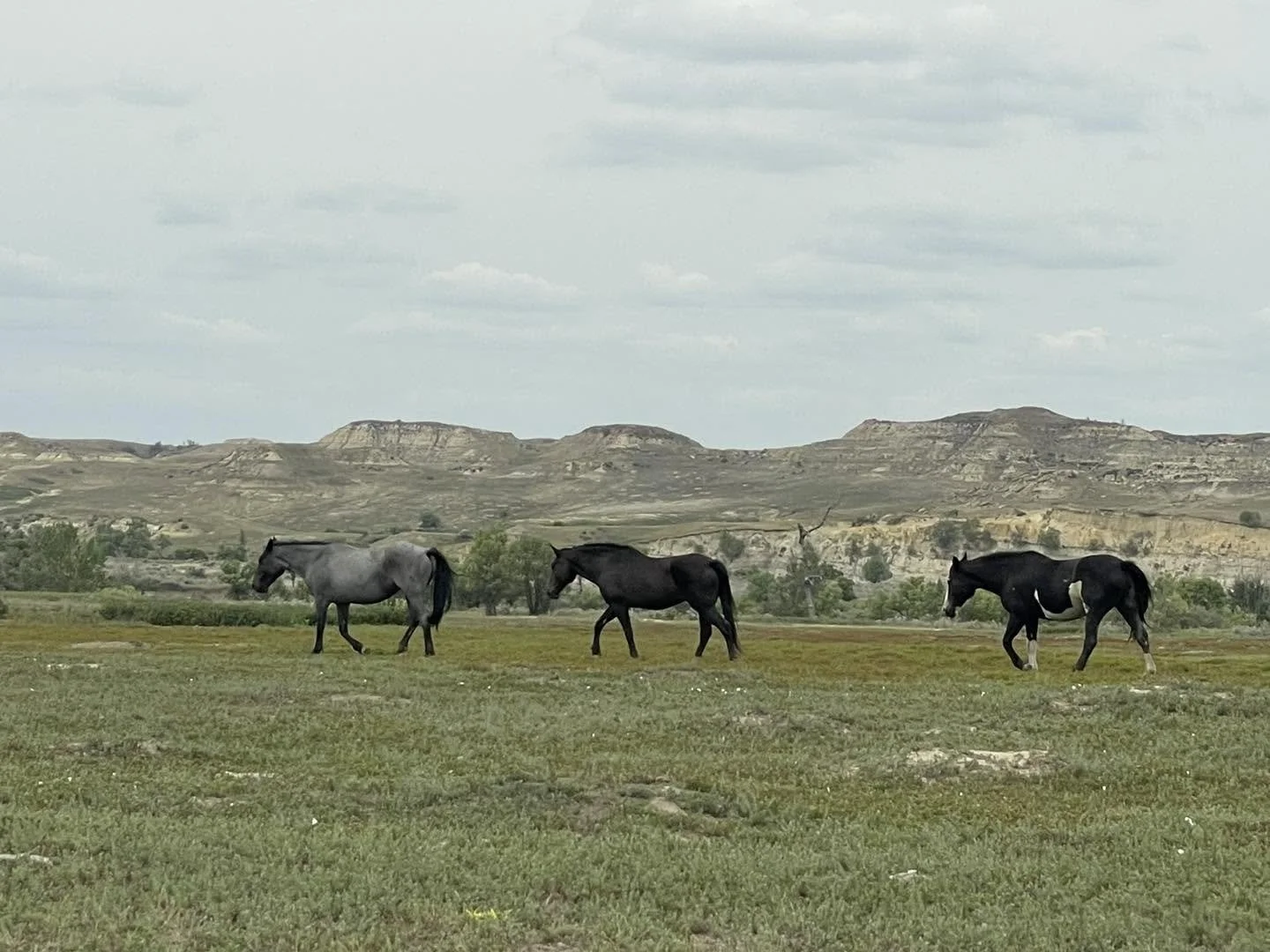
Wild horses roam freely throughout Theodore Roosevelt National Park's South Unit, providing one of the most memorable wildlife-viewing experiences in North Dakota. Arrive at sunrise or sunset for your best chance to spot them!
Named after the only president to have a national park dedicated solely to him, Theodore Roosevelt National Park preserves some of the most breathtaking landscapes in the northern Great Plains.
Visitors can enjoy:
Scenic drives through colorful Badlands formations
Hiking trails of varying difficulty
Wildlife viewing opportunities
Camping and backcountry adventures
Educational exhibits at the South Unit Visitor Center
The park is home to bison, wild horses (they show up out of the blue, they're amazing!!), prairie dogs, elk, mule deer, and countless other species that thrive within this rugged landscape. One of the most popular hikes is the Painted Canyon Nature Trail, which showcases some of the region's most colorful and dramatic geologic formations. Nearby, Little Missouri National Grassland and Sully Creek State Park offer additional opportunities for outdoor recreation and provide access to portions of the Maah Daah Hey Trail.
A Small Town with a Big Legacy
Few places in America have had a greater impact on a future president than Medora. What began as an ambitious frontier meatpacking venture evolved into the setting where Theodore Roosevelt developed the values that would eventually shape the nation's conservation movement.
Today, visitors come for the history, the scenery, the wildlife, and the western culture—but they leave with an appreciation for a community that refused to fade away. For a town of only 121 residents, Medora's influence on North Dakota—and on the nation itself—is truly remarkable. Of the 3,700+ communities we've visited over the last six years across even states, it easily ranks in the top ten for its charm and tourism opportunities.
These photos of Medora were primarily taken on August 20, 2024. Towns are dynamic places that change constantly; some locations may look different today than they did yesterday. Not every business, landmark, or point of interest is pictured. We hope you enjoy the photos and encourage you to share your own memories, stories, and experiences in the comments.
Learn more about Medora, North Dakota, by picking up a visitor’s guide here. North Dakota Tourism’s full state guide is available here.
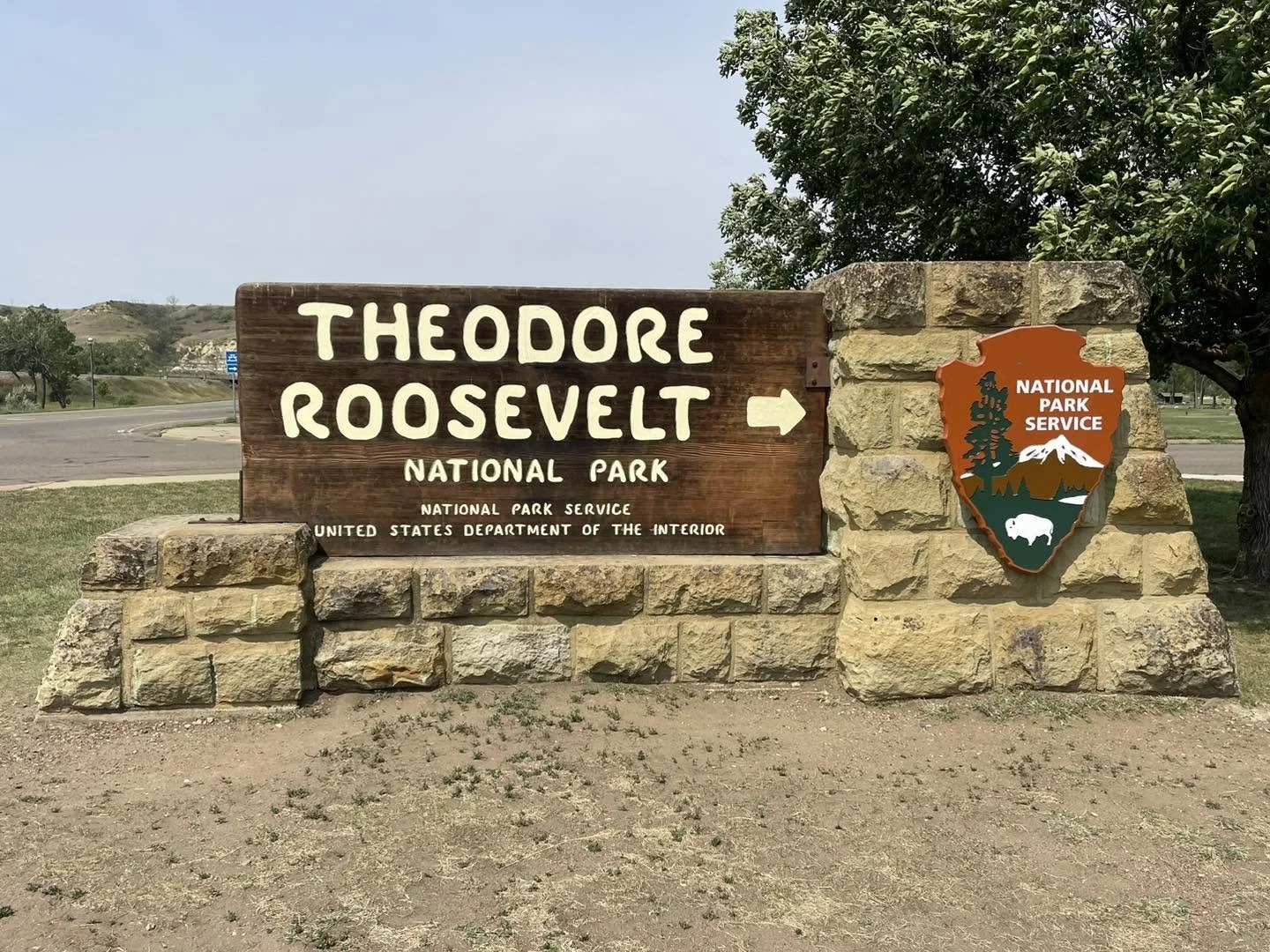
Medora serves as the gateway to the South Unit of Theodore Roosevelt National Park, the only national park in America named after a single person.
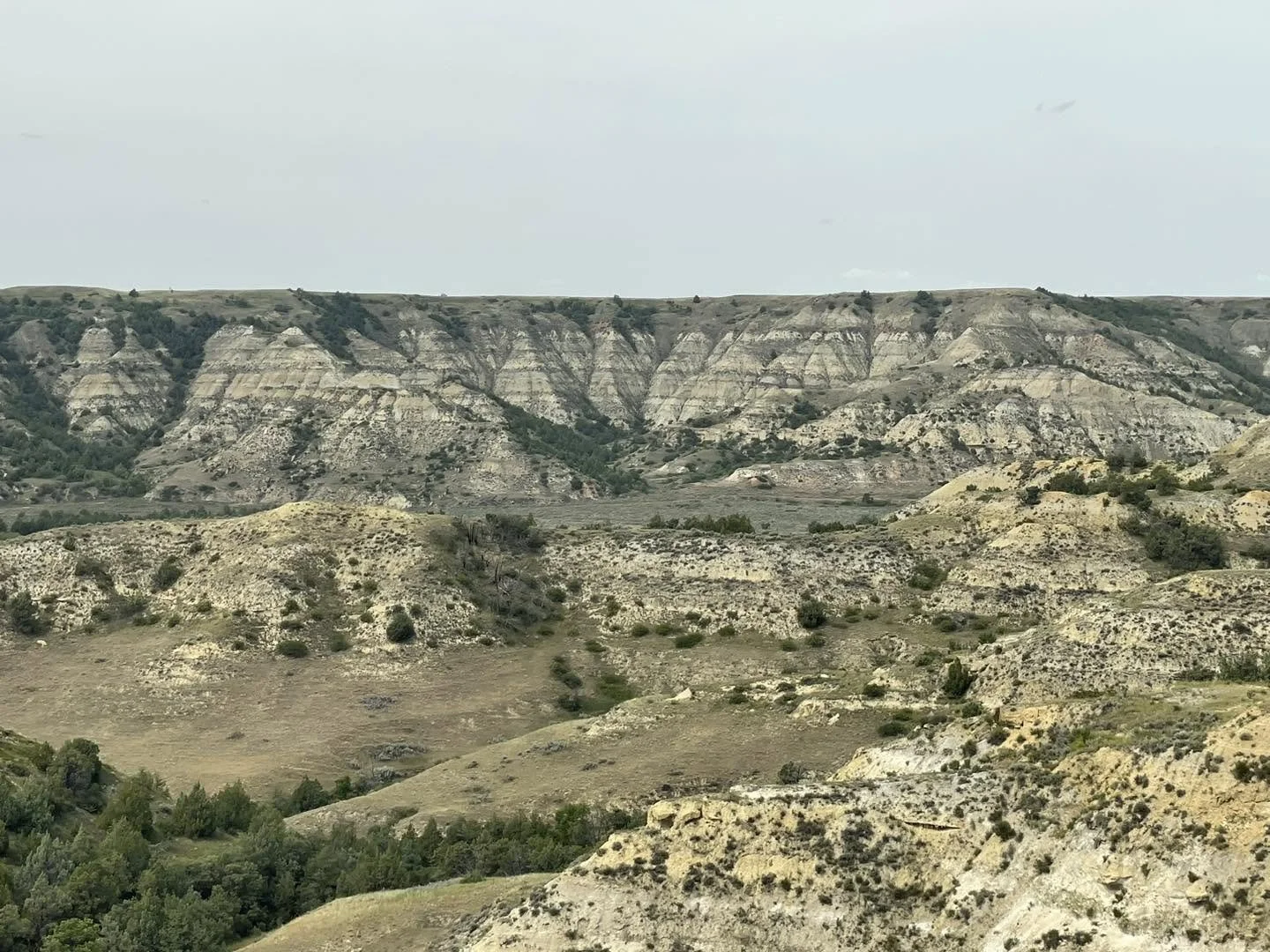
The colorful buttes, canyons, and rugged terrain surrounding Medora make up some of the most spectacular scenery in Theodore Roosevelt National Park.

Built in 1883 by French nobleman Marquis de Mores, the Château de Mores served as a hunting lodge and summer residence overlooking the Little Missouri River Valley.

A symbol of the rugged frontier that shaped both Medora and Teddy Roosevelt, this American bison stands inside the Harold Schafer Heritage Center.
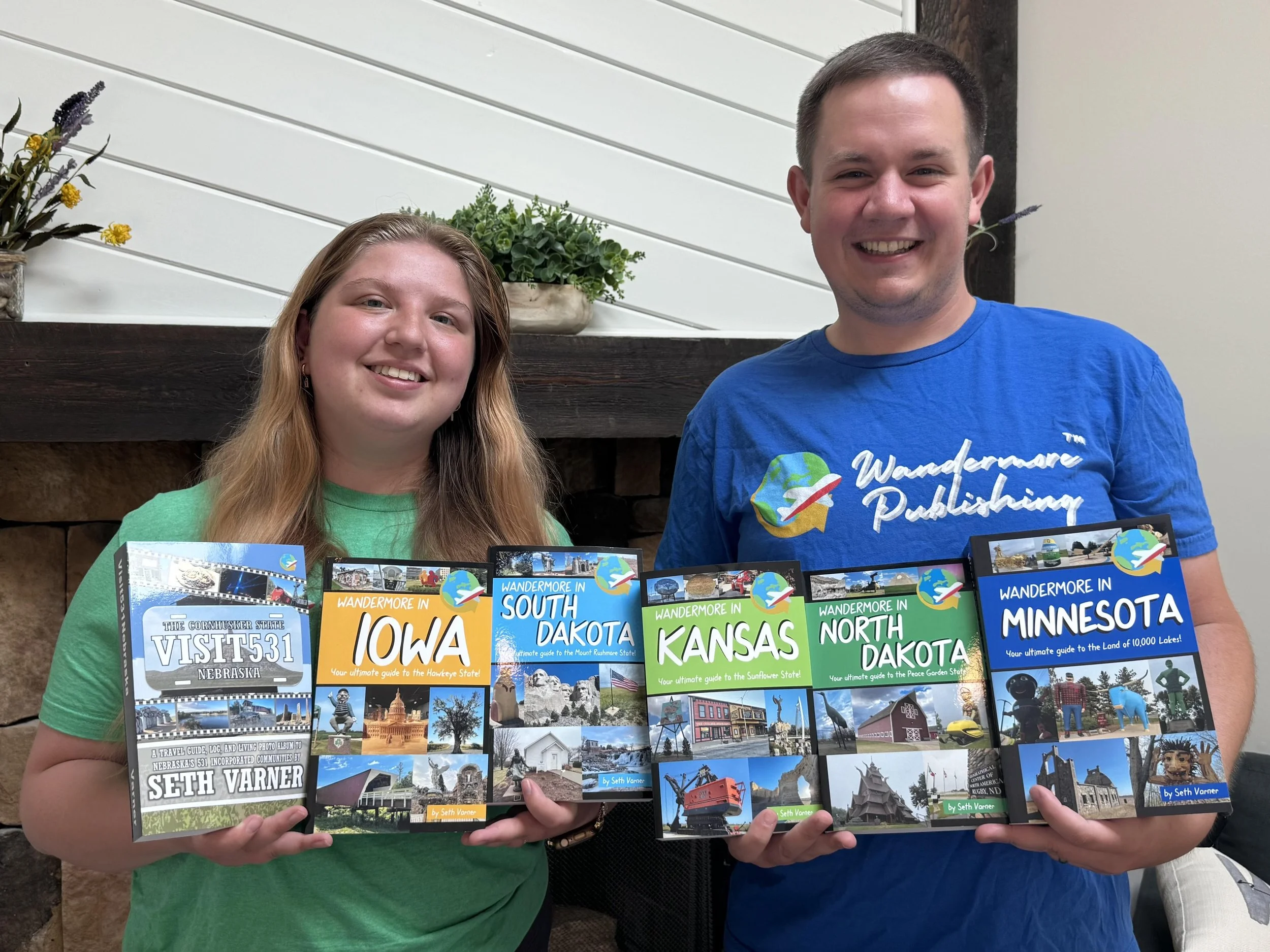
Enjoy learning about North Dakota’s communities? Follow Wandermore in North Dakota on Facebook for more small-town stories, local history, hidden gems, and travel inspiration from across the Peace Garden State. We're on a mission to explore and document all 355 incorporated communities in North Dakota—one town at a time. Join thousands of fellow travelers and history enthusiasts as we wander more through North Dakota together!
If you'd like to dive even deeper into North Dakota’s towns and history, be sure to check out Wandermore in North Dakota, our pictorial and historical travel guide featuring all 355 municipalities in the state. Whether you're planning your next road trip or simply enjoy discovering North Dakota’s hidden stories, it's the perfect companion for your journey.