
Alexandria, Minnesota: GIANT Vikings, Lakes, and One of Minnesota's Greatest Mysteries
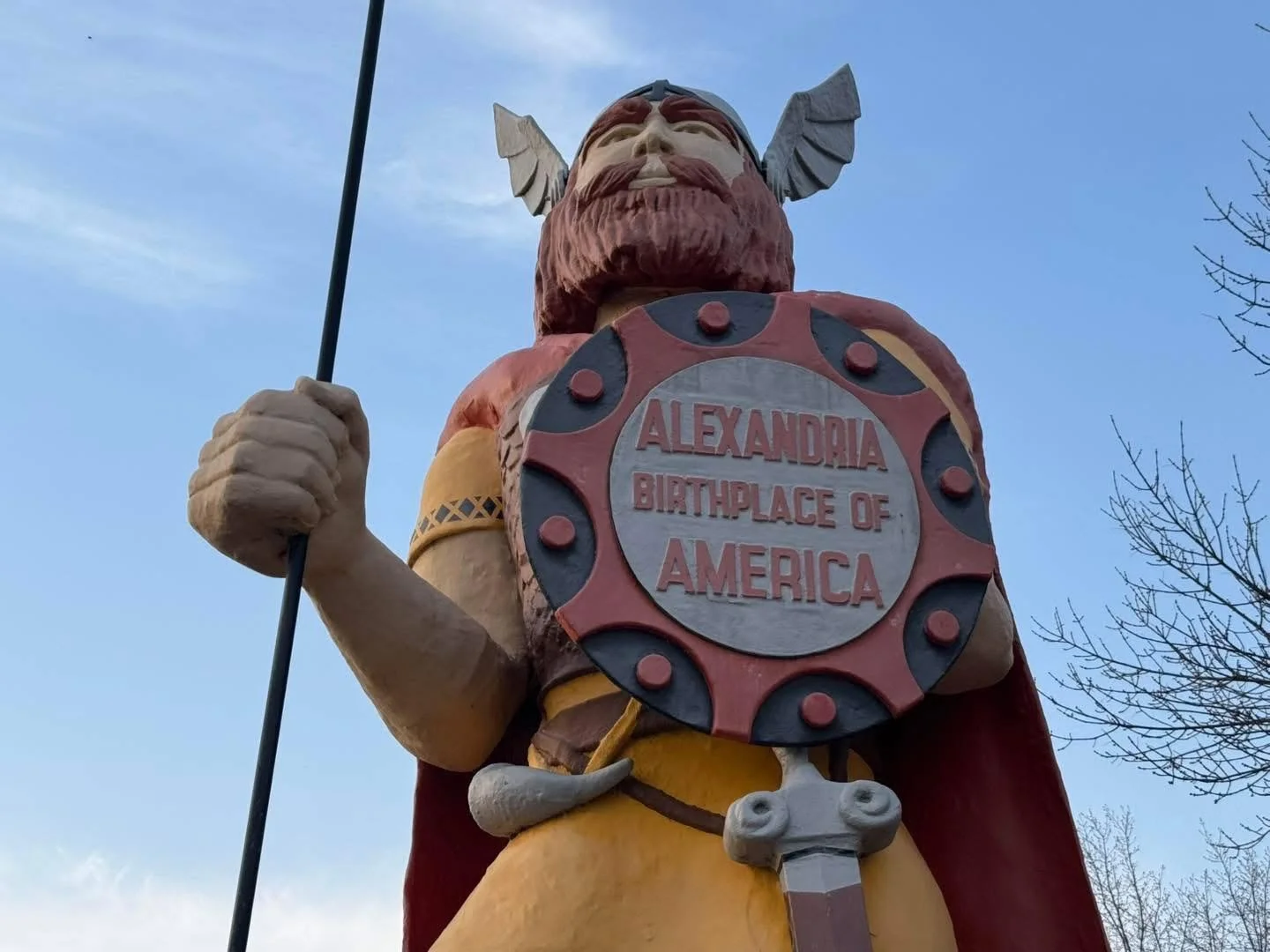
Yield, traveler! Big Ole, Alexandria's iconic 28-foot-tall Viking statue, has welcomed visitors to the "Birthplace of America" since arriving from the 1965 New York World's Fair.
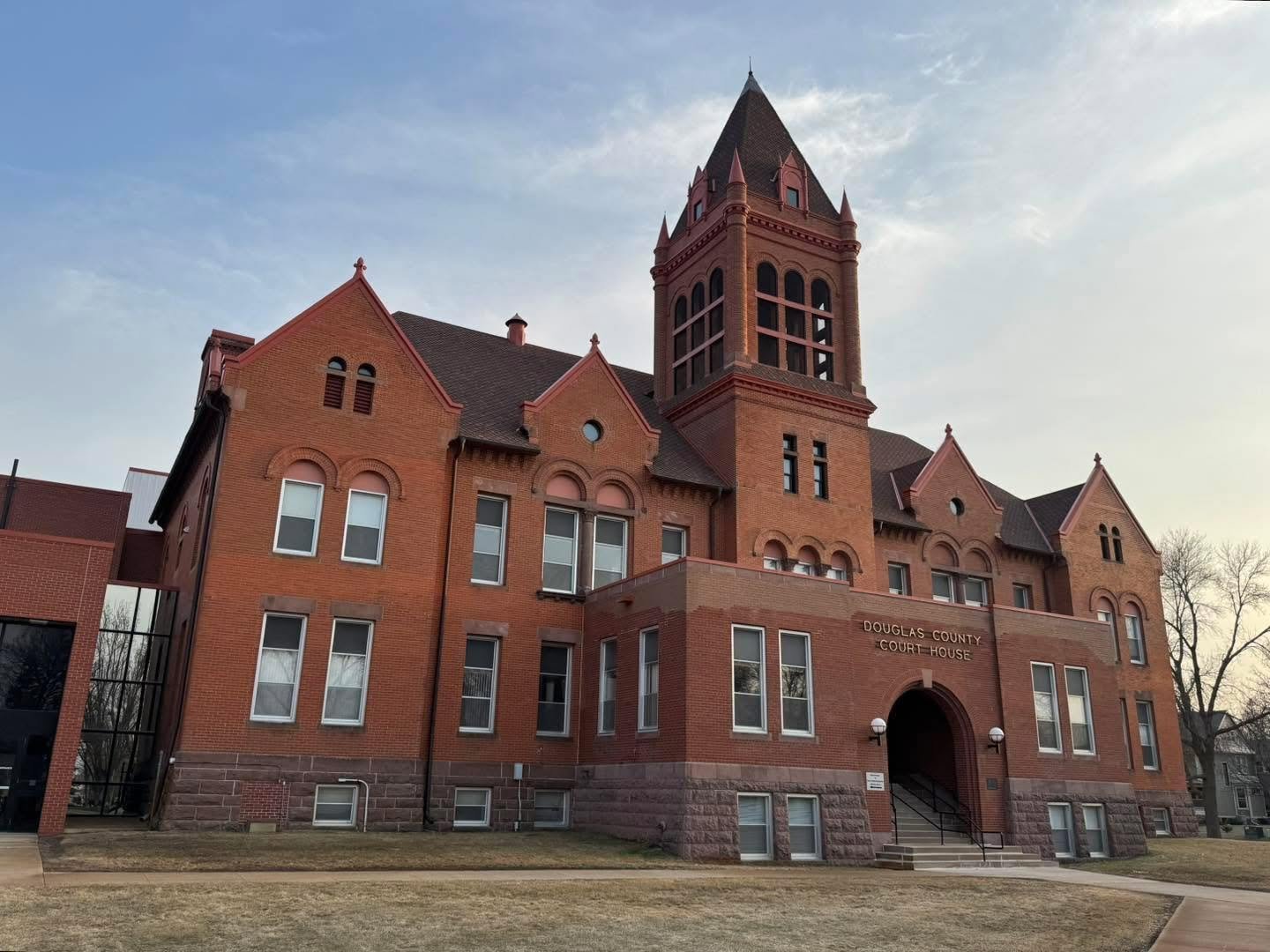
The historic Douglas County Courthouse, completed in 1895, remains one of Alexandria's most impressive architectural landmarks and is listed on the National Register of Historic Places.
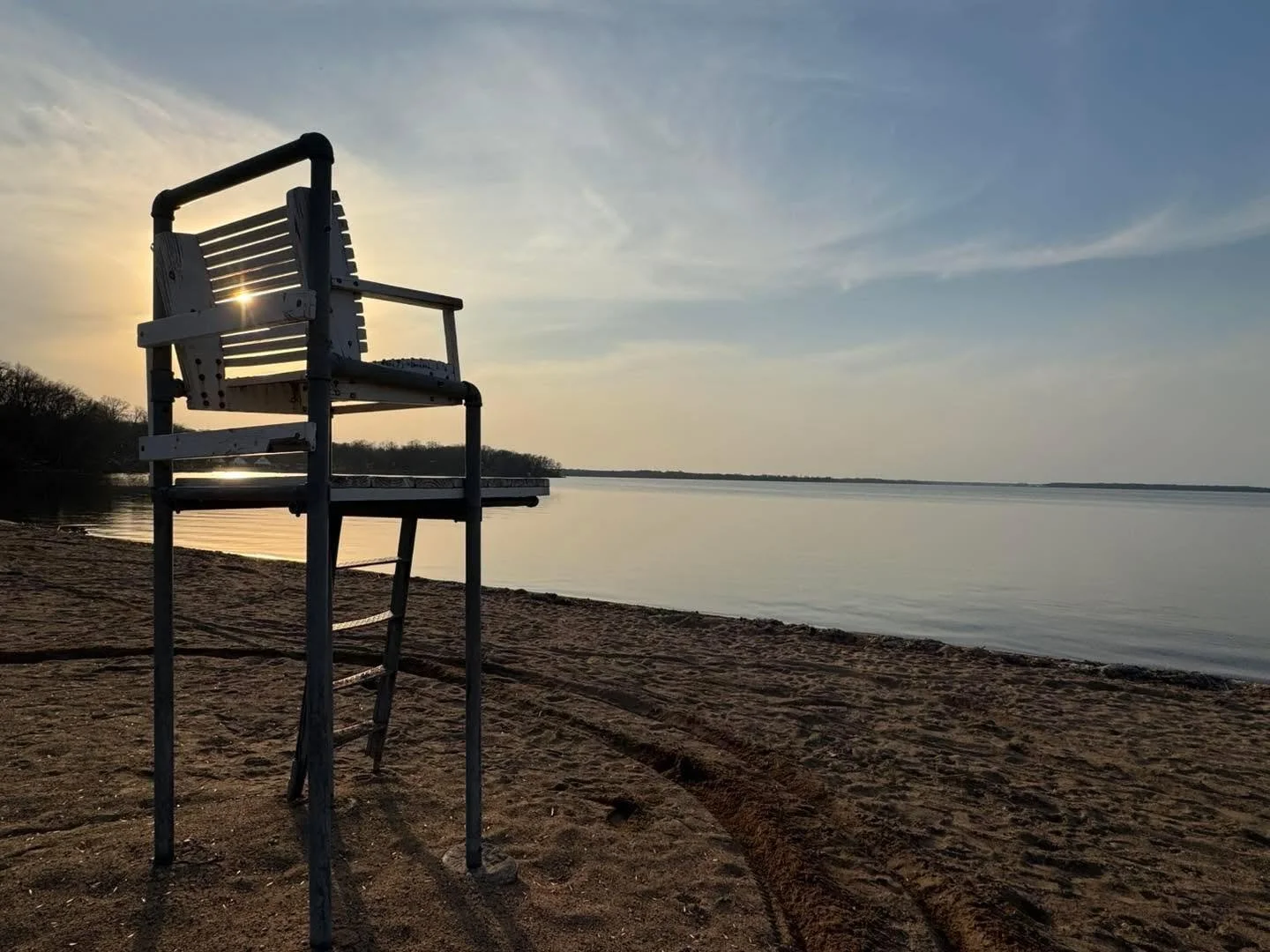
With forty-two named lakes surrounding the community, Alexandria has long been one of Minnesota's premier destinations for beaches, boating, and lakeside recreation.
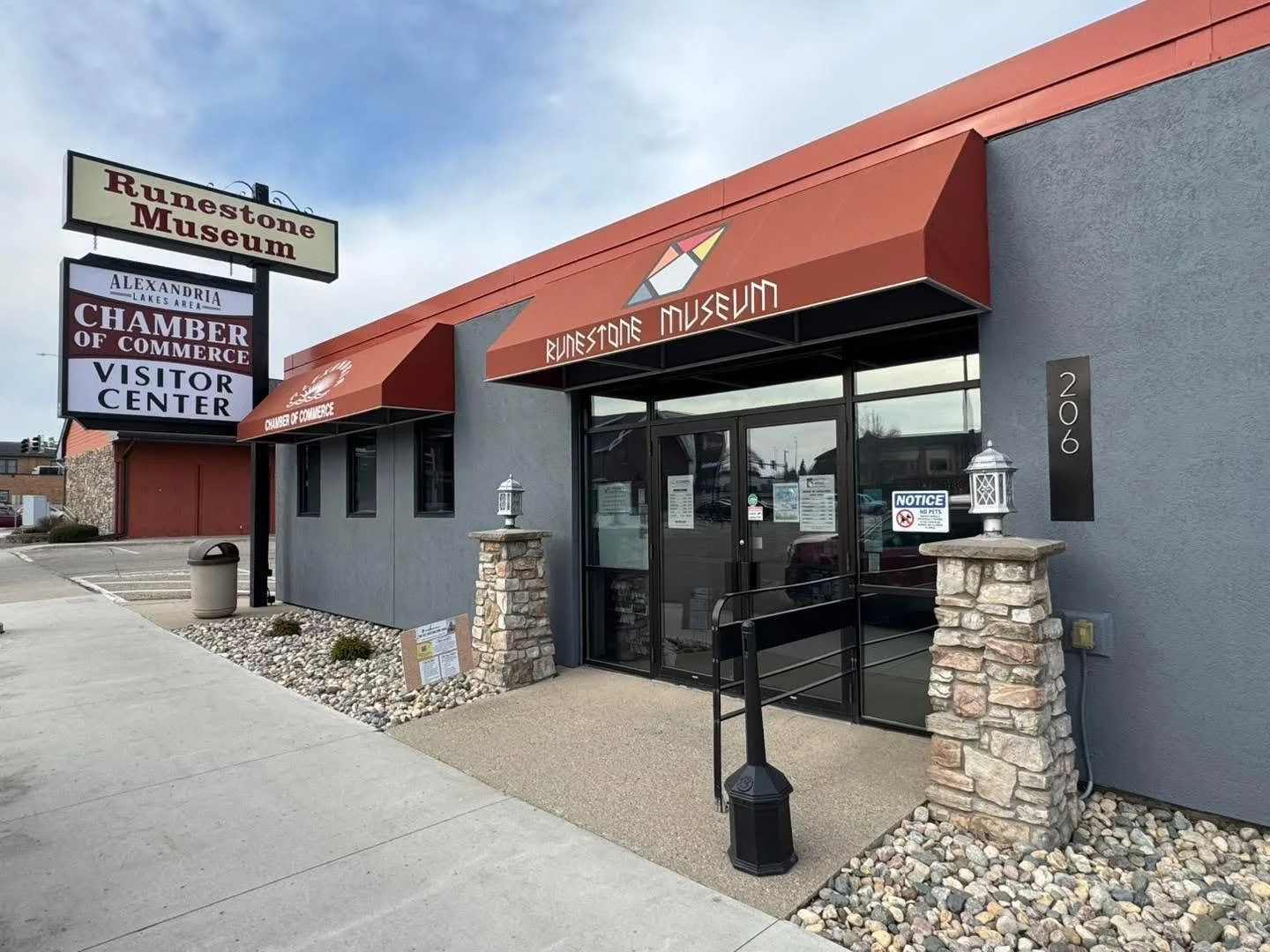
The Kensington Runestone Museum preserves one of Minnesota's most controversial artifacts while showcasing the history, culture, and mysteries of west-central Minnesota.
Population: 14,335
County: Douglas (County Seat)
Everybody loves a little bit of mystery! With its reputation as the home of the famous Kensington Runestone, Alexandria has proudly branded itself as the "Birthplace of America." Whether visitors believe that claim or not, there is no denying that this Douglas County community has become one of Minnesota's most popular destinations thanks to its fascinating history, thriving tourism industry, and picturesque setting among more than forty named lakes.
Founding Alexandria
Alexandria traces its origins to 1858 when brothers Alexander and William Kinkead arrived on the shores of Lake Agnes with plans to establish a new settlement. They named the community Alexandria after Alexander Kinkead, although the spelling was later changed to match the name of the famous Egyptian city.
A post office soon followed, with Charles Cook serving as the community's first postmaster before Alexander Kinkead assumed the role. Mail was initially sorted in Kinkead's cabin until a permanent business district began to emerge. General stores operated by J. H. Van Dyke and Thomas F. Cowing became important stopping points for travelers utilizing the J. C. Burbank stage line. Despite these early developments, growth remained slow. Following the Dakota War of 1862, concerns about potential attacks led to the establishment of Fort Alexandria, and much of the community functioned as a military outpost during its earliest years.
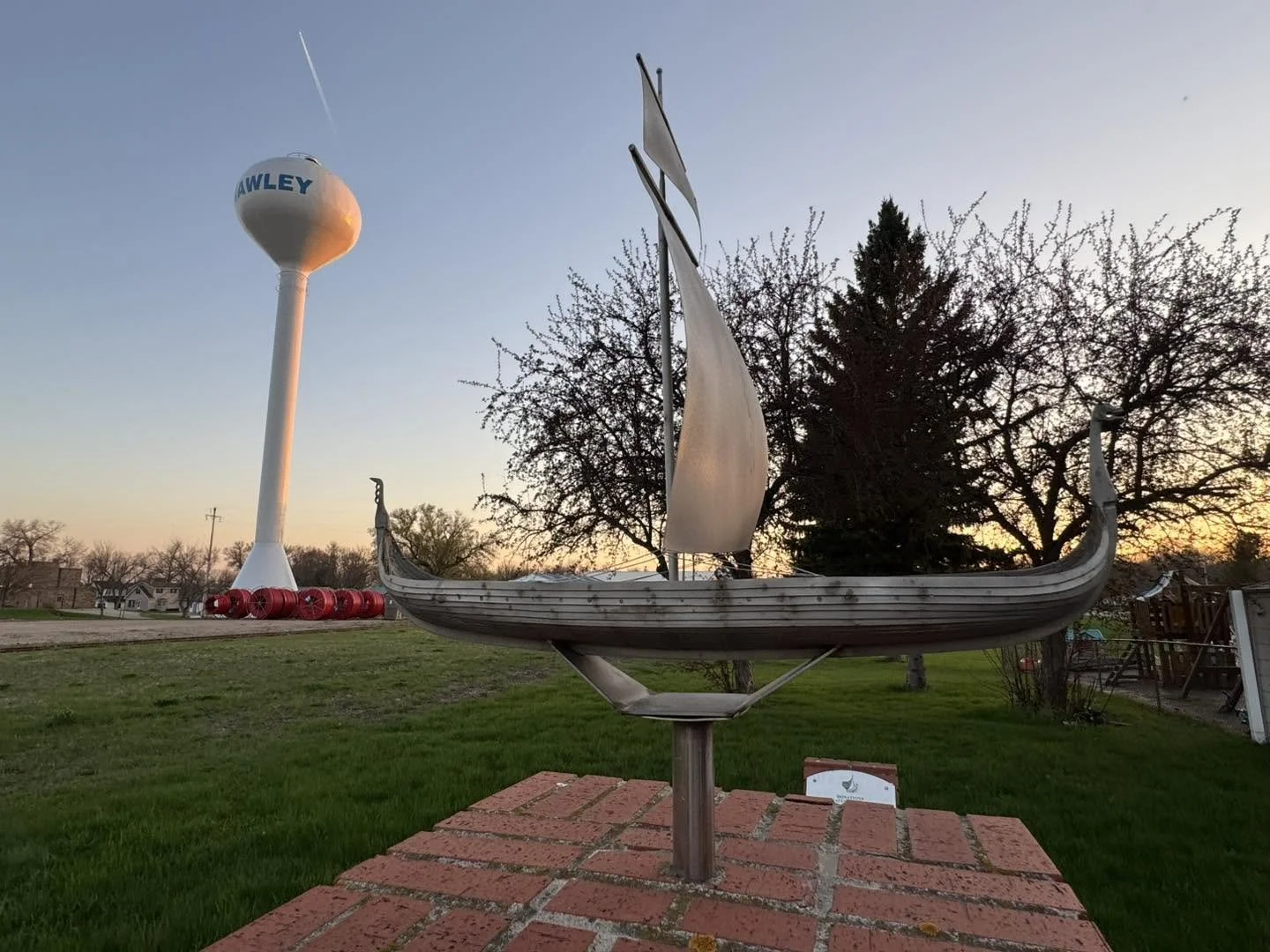
The Vision of W. E. Hicks
Alexandria's fortunes changed dramatically in 1868 when entrepreneur W. E. Hicks purchased the townsite. Although Alexandria had already been designated as the county seat, it lacked many of the civic institutions needed to thrive.
Hicks donated land for a courthouse, churches, and a jail while simultaneously establishing a mill, hotel, store, and the town's first newspaper. During 1868 and 1869, a federal land office operated in Alexandria, attracting hundreds of settlers to western Minnesota.
The city was officially incorporated on February 20, 1877. A year later, on November 5, 1878, the railroad arrived. Located at the junction of the Great Northern Railway and the Minneapolis, St. Paul & Sault Ste. Marie Railroad, Alexandria, quickly developed into a regional commercial center.
By 1910, the city's population had surpassed 3,000 residents. Numerous businesses flourished, including breweries, elevators, mills, confectioneries, boat works, warehouses, and manufacturing companies. Churches, schools, and civic institutions followed, transforming Alexandria into one of west-central Minnesota's most important communities.
Historic Alexandria
Several of Alexandria's most significant historic buildings remain standing today and are listed on the National Register of Historic Places.
Among them are:
The 1903 Alexandria Public Library is a beautiful Carnegie Library built in the Beaux-Arts style.
The 1895 Douglas County Courthouse is an impressive Victorian-era landmark.
The Great Northern Passenger Depot is considered one of the railroad's finest stations in Minnesota.
The 1910 U.S. Post Office building.
The Alexandria Residential Historic District.
The Knute Nelson House.
The Thomas F. Cowing House.
The Noah P. Ward House.
These sites help preserve the story of Alexandria's transformation from a frontier settlement to a thriving regional hub.
The Mystery of the Kensington Runestone
No attraction has brought Alexandria more international attention than the Kensington Runestone. In 1898, Swedish immigrant Olof Ohman claimed to have discovered a 202-pound greywacke stone covered in ancient Nordic runes while clearing land near Kensington, Minnesota. According to Ohman, the stone was found intertwined among the roots of a tree.
The inscription appeared to describe a group of Norse explorers who had traveled through the region in 1362, more than a century before Christopher Columbus reached the Americas.
The discovery sparked one of the most enduring historical debates in North America. Critics quickly labeled the stone a hoax, citing questions regarding weathering patterns and language usage. Supporters, however, have pointed to more recent research showing that some linguistic features once considered impossible have since been identified in authentic historical Scandinavian writings.
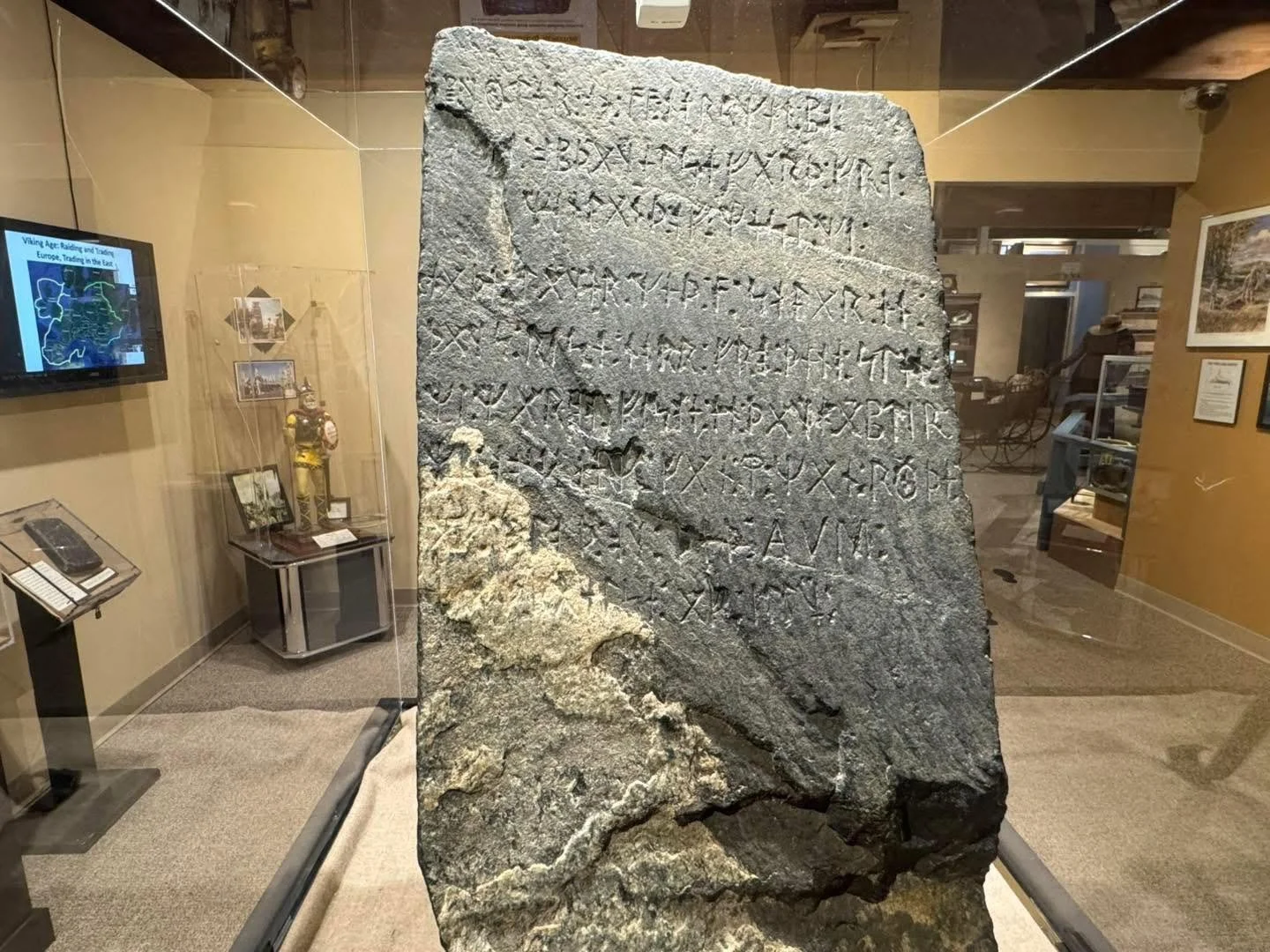
Discovered near Kensington in 1898, the famous Kensington Runestone remains at the center of an ongoing debate over whether Norse explorers reached Minnesota in 1362.
Adding further intrigue is the fact that many of the earliest experts who dismissed the stone reportedly never examined it in person. Supporters also argue that Ohman, who had limited formal education, would have struggled to fabricate such a detailed artifact.
Whether genuine or not, the Kensington Runestone has become one of Minnesota's most famous historical artifacts and remains deeply connected to Alexandria's identity. Visitors can view the original stone at the Kensington Runestone Museum, where it is displayed alongside other unusual artifacts and exhibits detailing the region's history. An 18-ton replica runestone erected in 1951 stands near downtown as a tribute to the mystery that continues to fascinate visitors from around the world. Because of its popularity, the stone has spawned several television episodes and reviews where "experts" attempt to discern its authenticity.
Lakes, Museums, and Tourism
While the runestone may attract first-time visitors, Alexandria offers plenty of reasons to stay longer. The city sits amid a region known for its 42 named lakes, making it one of Minnesota's premier resort destinations. Boating, fishing, swimming, and lakeside recreation draw visitors throughout the summer months. Those interested in maritime history can explore the Legacy of the Lakes Museum, which features beautifully restored wooden boats, exhibits on Minnesota's boating heritage, and displays highlighting shipwrecks from Lake Superior.
Standing watch over the city is Big Ole, a 28-foot-tall Viking statue created for the 1965 New York World's Fair. Today, the giant Norse figure serves as Alexandria's most recognizable landmark and a symbol of the community's connection to the mysterious Kensington Runestone.
Alexandria is also home to Alexandria Technical and Community College, established in 1961 and continuing to serve students from across the region. The city's popularity has fueled significant growth in recent decades. Since the 2000 Census, Alexandria's population has nearly doubled as more people have discovered the area's high quality of life and recreational opportunities.
Famous People from Alexandria
Alexandria has produced an impressive list of notable residents, including:
Brock Lesnar is the only athlete to capture heavyweight championships in WWE, UFC, NCAA wrestling, NJPW, and IGF competition.
Tom Lehman is the only golfer to earn Player of the Year honors across all three PGA Tours.
Peter Krause, Emmy and Golden Globe nominee, is best known for his role in Six Feet Under.
John Hawkes, Academy Award and Emmy-nominated actor.
Bruce Smith, 1941 Heisman Trophy winner and two-time national champion with the University of Minnesota.
Dave Dalby, three-time Super Bowl champion with the Raiders.
John Hammergren, longtime CEO of McKesson Corporation.
Cliff Sterrett, creator of the long-running comic strip Polly and Her Pals.
A Destination Unlike Any Other
Few Minnesota communities combine history, mystery, recreation, and small-town charm quite like Alexandria. Whether you're exploring the debate surrounding the Kensington Runestone (are you a believer? I think I am!), admiring historic architecture, spending a day on one of the area's beautiful lakes, or snapping a photo with Big Ole, Alexandria offers visitors a memorable experience that blends Minnesota's past with its present. For many travelers, the city's Viking heritage may be what first captures their attention. But it's the lakes, history, and welcoming atmosphere that keep them coming back! Those visiting the area should heavily consider adding nearby Kensington to their itinerary, where the historic runestone was originally discovered.
These photos of Alexandria were primarily taken on June 16, 2025. Towns are dynamic places that change constantly; some locations may look different today than they did yesterday. Not every business, landmark, or point of interest is pictured. We hope you enjoy the photos and encourage you to share your own memories, stories, and experiences in the comments.
Learn more about Alexandria, Minnesota, by picking up a guide here. Explore Minnesota’s full state guide is available here.
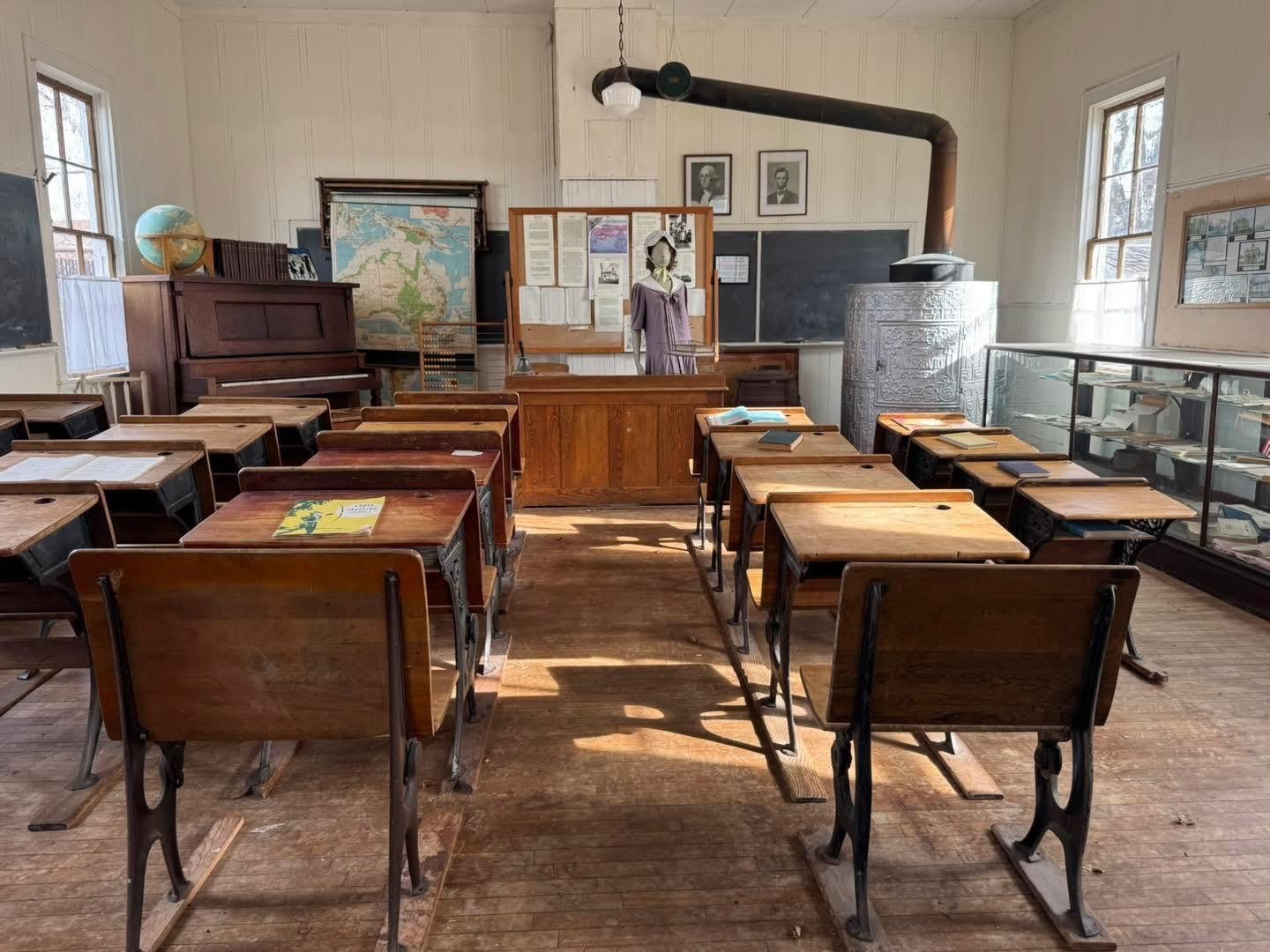
Step back in time inside the restored 1885 Mde Township School at the Runestone Museum, where generations of Douglas County students once learned their lessons.
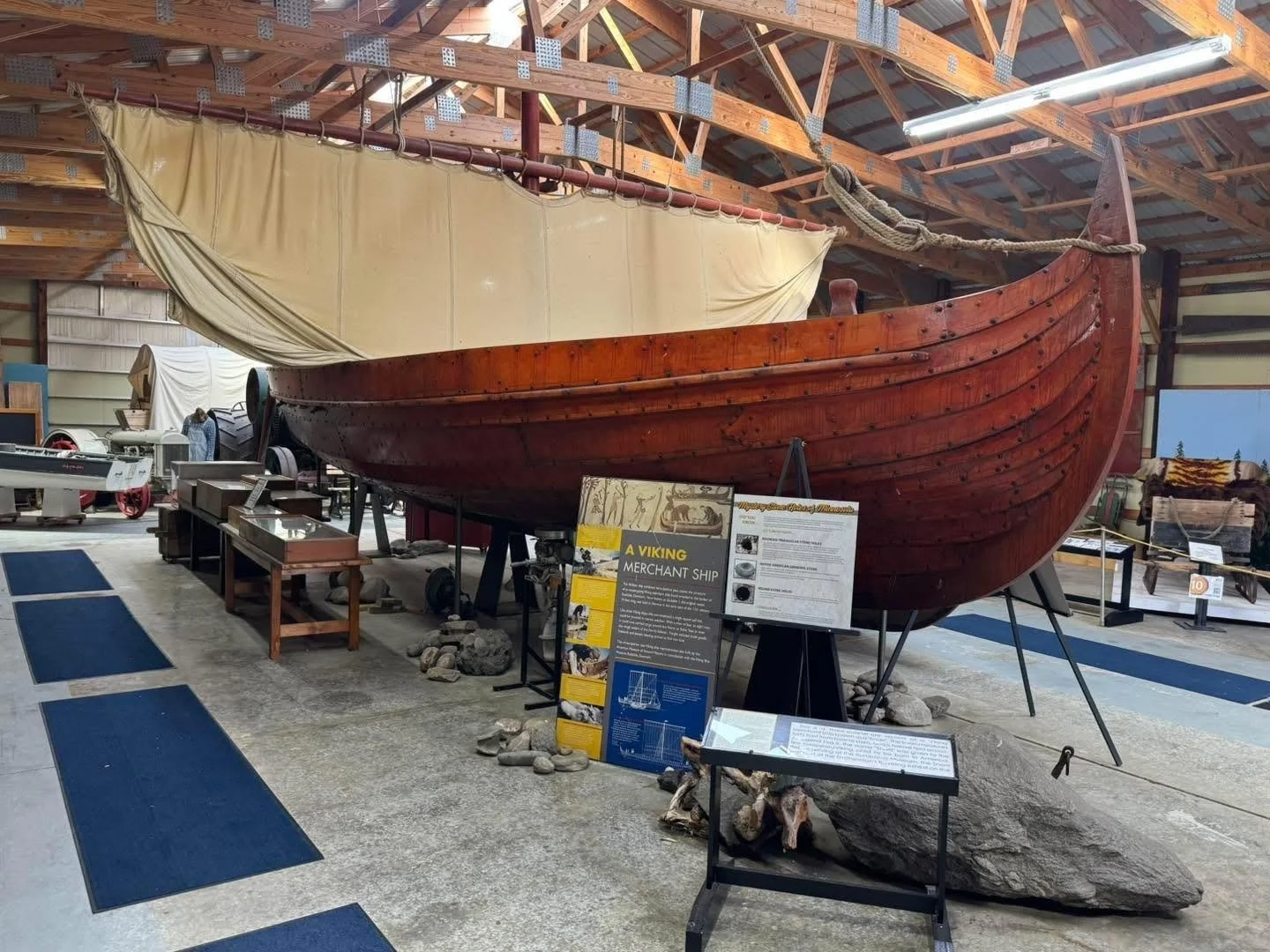
A replica Viking merchant ship—not to be confused with the Hjemkomst in Moorhead—highlights Alexandria's deep connection to the Kensington Runestone mystery and the community's celebrated Norse heritage.
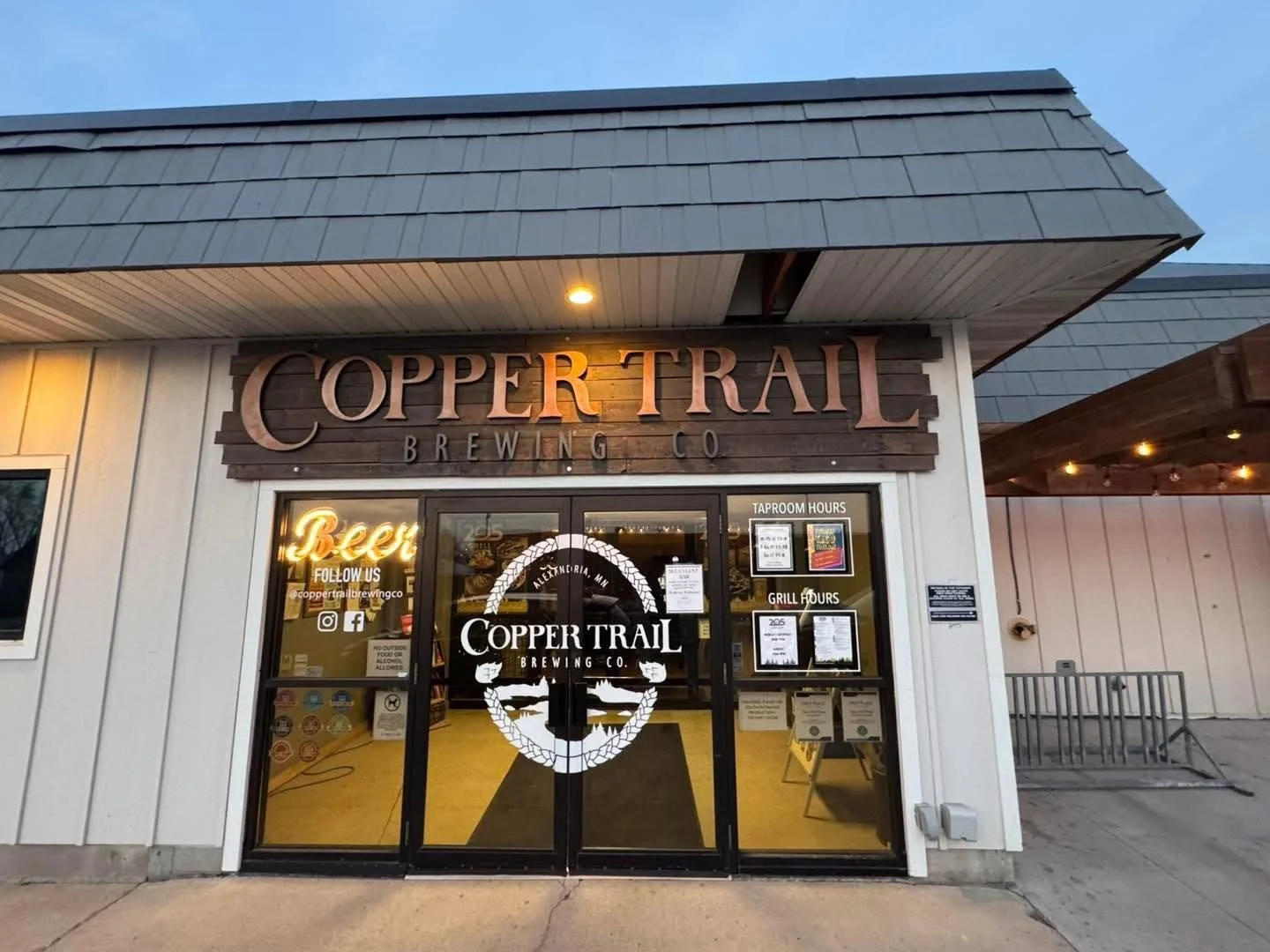
Copper Trail Brewing Company serves handcrafted beers and locally inspired flavors in the heart of Alexandria's vibrant downtown district. They’ve got delicious eats and even better beers! 🍻
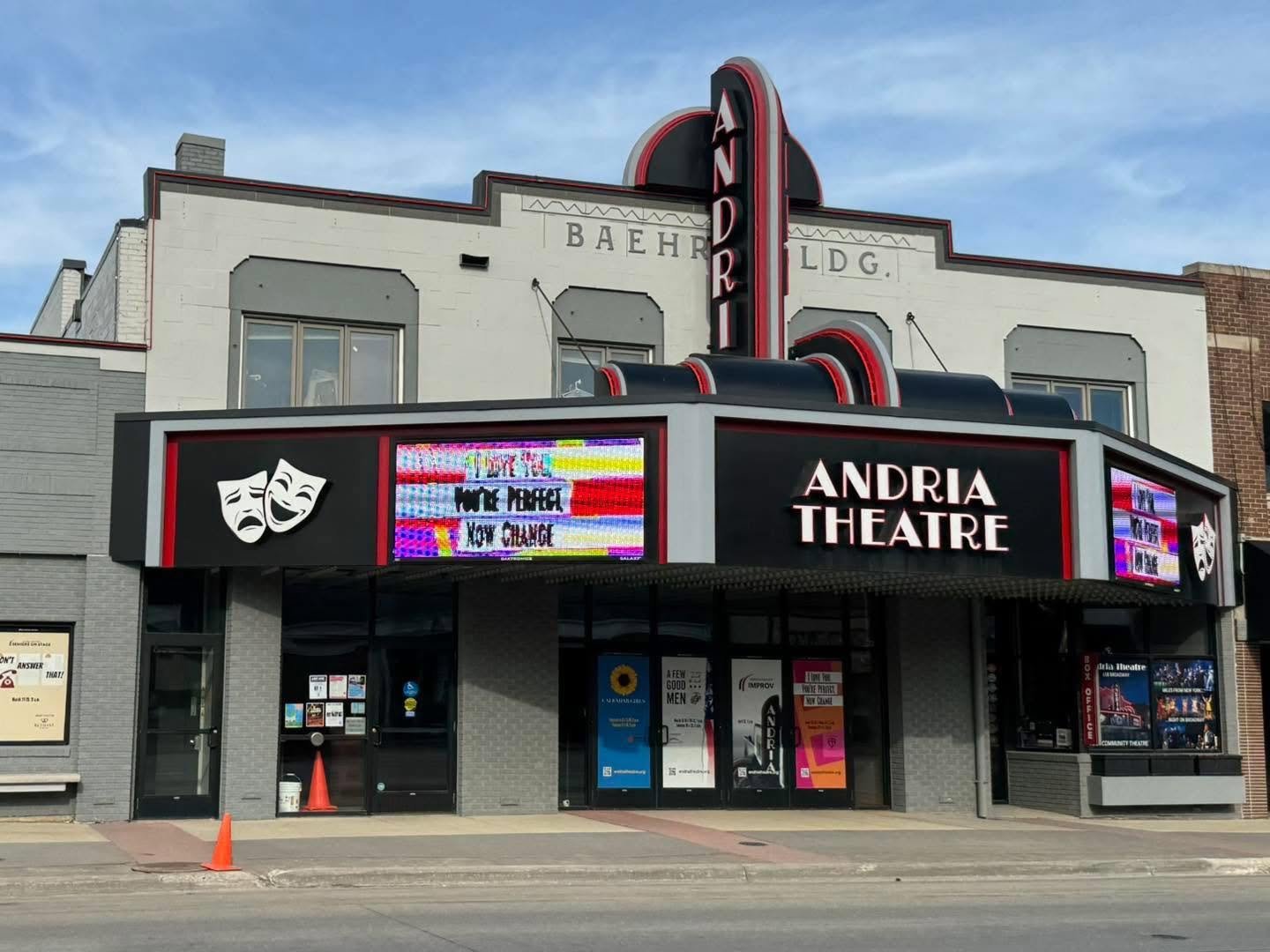
Another gem of downtown "Alec" (as the locals refer to it) is the Andria Theatre, which has entertained audiences for ages with community productions, concerts, and performing arts events.
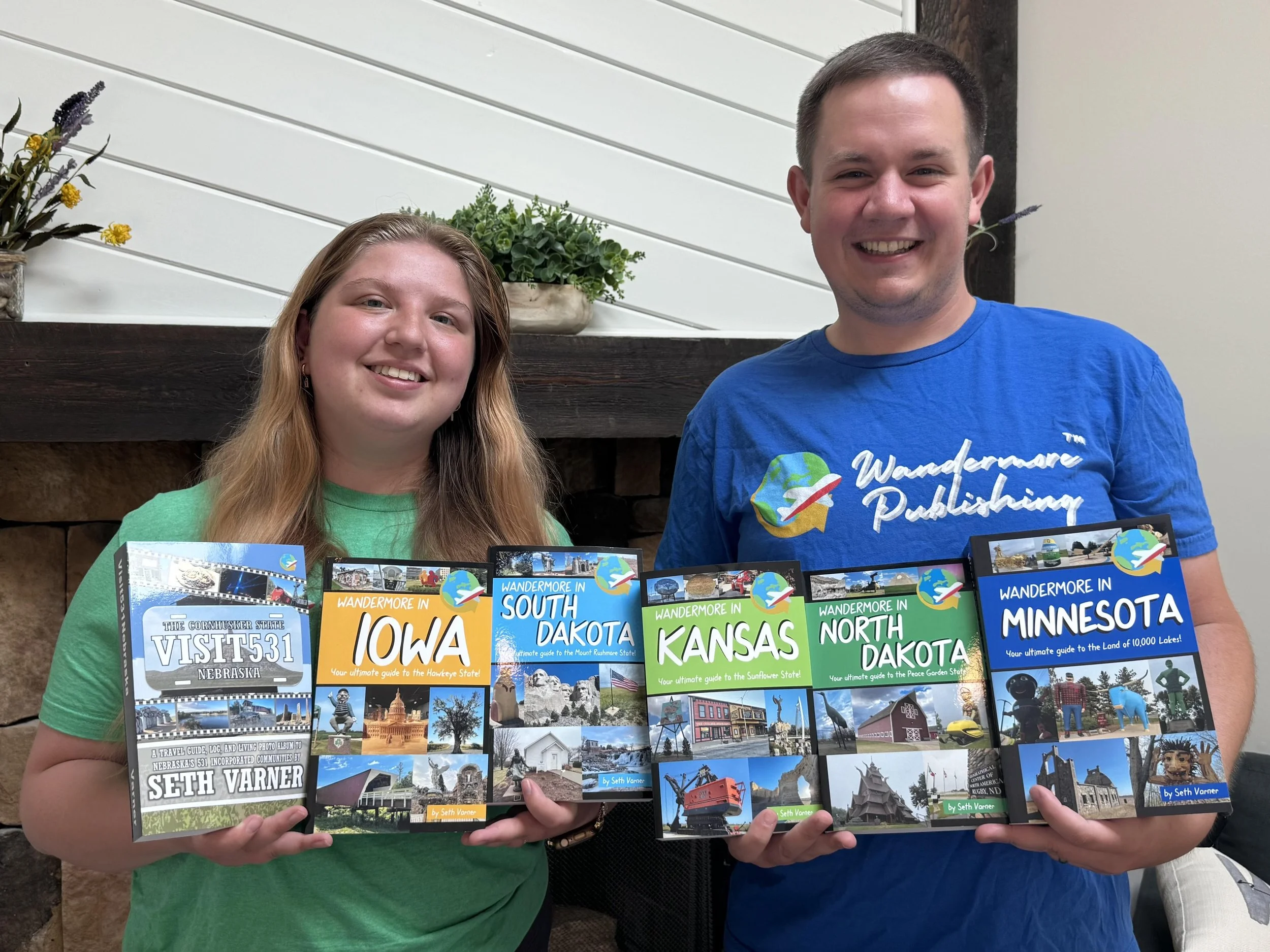
Enjoy learning about Minnesota’s communities? Follow Wandermore in Minnesota on Facebook for more small-town stories, local history, hidden gems, and travel inspiration from across the Land of 10,000 Lakes. We're on a mission to explore and document all 856 incorporated communities in Minnesota—one town at a time. Join thousands of fellow travelers and history enthusiasts as we wander more through Minnesota together!
If you'd like to dive even deeper into Minnesota’s towns and history, be sure to check out Wandermore in Minnesota,
our pictorial and historical travel guide featuring all 856 municipalities in the state. Whether you're planning your next road trip or simply enjoy discovering Minnesota’s hidden stories, it's the perfect companion for your journey.

No attraction has brought Alexandria more international attention than the Kensington Runestone. In 1898, Swedish immigrant Olof Ohman claimed to have discovered a 202-pound greywacke stone covered in ancient Nordic runes while clearing land near Kensington, Minnesota. According to Ohman, the stone was found intertwined among the roots of a tree…